

Leave Your Message

Blog

10 Best Automation Robots for Manufacturing in 2026

10 Best Automation Robots for Manufacturing in 2026

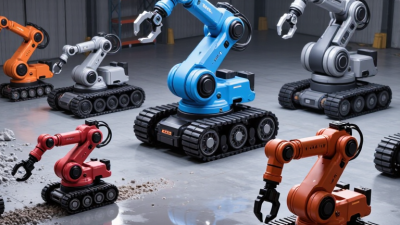
Manufacturing floors are evolving pretty quickly, but interestingly, the best robot isn't always the latest model. In a welding cell, what really matters is stable reach and repeatable motion. A packaging line, on the other hand, might rely more on safe collaboration, fast changeovers, and just staying up and running reliably. So, if you're checking out the 10 best Automation Robots for manufacturing in 2026, here's how we broke it down. We compared each system based on task fit, payload, reach, how much integration it needs, safety features, and the kind of support you get. The point isn't just to list specs—it's to help manufacturers actually narrow things down before they start requesting quotes or planning a pilot. Joseph Engelberger — basically the godfather of industrial robotics — once said, “I can’t define a robot, but I know one when I see one.” And honestly, that kind of hits the nail on the head. The word “robot” gets thrown around for all sorts of machines that don’t have much in common. Like, a six-axis arm hefting a metal casting? That’s not the same as a mobile robot hauling bins around a warehouse. Not even close. The details are what make or break it. You can have a really solid robot, but if the tooling, software, or how the workcell is laid out doesn't match the job, it’s going to let you down. Look, this list isn't meant to be the final word—it just covers established players like ABB, FANUC, KUKA, Yaskawa, Universal Robots, and a few others. We tried to stick to capabilities you can actually verify, but specs and availability shift depending on configuration and region, so keep that in mind. Honestly, no ranking can replace visiting the site and seeing things for yourself. That's a limitation we'd rather be upfront about. So treat these profiles as a jumping-off point, and make sure to double-check cycle times, integration costs, operator training, and service coverage with the supplier before you commit. At the end of the day, a well-chosen automation robot should be solving a specific production problem—not, you know, turning into some expensive demo that never actually reaches the line.
Read more »
Ethan By:Ethan - November 6, 2026
7 Best Deep Robotics Robots to Buy in 2026

7 Best Deep Robotics Robots to Buy in 2026

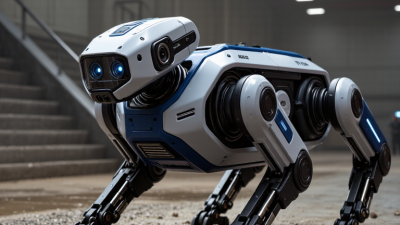
Okay, so you’re trying to pick one of the 7 best Deep Robotics robots to buy in 2026? Honestly, it starts with the work you actually need done. A robot meant to cross a wet warehouse floor is going to need something different than one inspecting a rocky slope. And sure, Deep Robotics systems look awesome in a demo — but if you’re building a shortlist, you’ve got to start with measurable needs, not just the wow factor. When you're thinking through this, don't forget the basics—like the terrain, how much payload you're working with, how long it needs to run, what the sensors can actually cover, and whether you've got the right tools for maintenance. It's easy to overlook one of those, but they all matter. Rodney Brooks—you know, the robotics guy who co-founded iRobot—once said, “The world is not a well-defined place.” That’s worth remembering when you’re comparing robots. Real environments are messy: glare on the floor, loose cables, uneven steps, random obstacles. A slick demo video can only show so much. So ask the tough questions: How long does it actually run under load? What about dust and water protection? How easy is it to swap the battery? And don’t skip the service terms. Also, make sure the software and sensors actually fit the tasks you have in mind, not just the perfect route they show in the promo. Honestly, the little stuff matters a lot. Will the robot actually fit through a standard doorway? Can someone swap out its battery without hauling in special equipment? And what about support—does the supplier offer training and spare parts where you’re located? Prices and configurations change all the time, so it’s worth double-checking the current specs before you commit. Sure, you’ll still run into trade-offs; no single robot is going to be perfect for every site. In this guide, we compared seven options using practical, real-world criteria—but we took those headline performance claims with a grain of salt. You know, start by using that to whittle down your list. Then, once you're down to a few, ask for a demo that's actually tailored to what you'll be doing—before you make any final call, obviously.
Read more »
Ethan By:Ethan - November 2, 2026
China Top Quadruped Patrol Robot Dog Manufacturers

China Top Quadruped Patrol Robot Dog Manufacturers

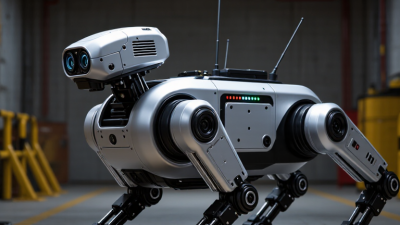
So, here's the thing about quadruped patrol robot dogs—they can actually move through spaces that would totally trip up wheeled machines. I'm talking stairways, uneven ground, even those super narrow industrial corridors. But if you're managing a facility, the real worth isn't just about fancy legs or a flashy demo. What really matters is how they hold up in daily use: battery life, how well they handle obstacles, camera clarity, communication range, and whether maintenance is a pain or not. Honestly, the small stuff can make or break it. You know, a reliable Patrol Robot should be easy to control and give you the visual info you actually need—without making your normal rounds any harder. Chinese manufacturers have quite a range of robots – different sizes, payloads, sensor setups, software packages, you name it. But trying to compare them? That takes a bit of work. You've got to dig into the specs, and not just the brochure ones – ask for the latest numbers. And don't forget to question how they actually handle the floors you deal with, not just smooth concrete. A quick demo on hard ground might not tell you how it'll do on wet tile or gravel, right? I've seen too many people get swayed by glossy brochures, but at the end of the day, field results speak louder. So yeah, put more trust in real-world performance. Here’s the thing: when you’re looking at robots for inspection and patrol, don’t just take the brochure at face value. You’ve got to separate what’s standard from what’s optional—and really think about whether the advertised performance actually matches the conditions at your site. Because honestly, no single model is going to work everywhere. This guide is meant to help you with the key things to consider when evaluating Chinese suppliers and picking a robot that fits your needs. Now, one heads-up: comparisons aren’t always straightforward, since different manufacturers use different test methods. So don’t be shy about asking for a live demo and digging into specifics—it’s the best way to figure out what a product can really do.
Read more »
Oliver By:Oliver - October 29, 2026
How to Choose Deep Robotics for Global Procurement?

How to Choose Deep Robotics for Global Procurement?

Picking Deep Robotics for global procurement? It’s not just about watching a slick demo go well. Buyers really need to line up robot performance with the actual site conditions, service capacity, compliance requirements, and the long-term costs of running the thing. What works for a warehouse in Singapore might not be the right fit for a mining facility in Australia — the needs can be pretty different. And details like floor quality, weather, network coverage, and local skills all shape how well it performs in practice. So, this guide is really about how procurement teams can evaluate Deep Robotics using practical, real-world evidence. When you run controlled trials, make sure you're measuring things like navigation accuracy, battery life, how well it handles obstacles, inspection quality, and how it recovers after a communication loss. It's also worth asking for documented test methods, maintenance records, training plans, and customer references from similar environments. And honestly, independent technical reviews can go a long way toward building confidence. Local distributors matter too, and that's especially true when you need replacement parts or on-site support. Compliance really can't be an afterthought here. Buyers should look into import requirements, workplace safety expectations, cybersecurity controls, data handling, and the international trade rules that apply. And a clear contract should spell out acceptance tests, software updates, warranties, spare parts, and service response times. Total cost definitely deserves a close look, too—the purchase price is only one line. Look, no scorecard is ever perfect. A pilot that looks polished can still be hiding some pretty tough maintenance work. And a cheaper option? It might save money now but lead to more downtime down the road. So procurement teams should write down these uncertainties—don’t just squeeze every issue into a tidy ranking. Deep Robotics might be a great fit for certain operational environments, but responsible buyers still need to verify that fit with real evidence, expert review, and some measured field experience. Do that, and you’ll end up with decisions that are practical, defensible, and reliable—even across borders.
Read more »
Ethan By:Ethan - October 25, 2026
How to Choose a Quadruped Patrol Robot Dog?

How to Choose a Quadruped Patrol Robot Dog?

Choosing a Quadruped Patrol Robot Dog requires more than comparing cameras, battery sizes, and advertised walking speeds. A suitable Patrol Robot must match the site, mission, and operating team. A wet stairwell, uneven gravel, and a narrow warehouse aisle create very different demands. Professor Sangbae Kim of the Massachusetts Institute of Technology has stated, “Legged robots can go where wheeled robots cannot.” That principle remains useful, but mobility alone does not guarantee dependable patrol performance. This guide examines practical selection criteria for a Quadruped Patrol Robot Dog. It considers terrain handling, runtime, charging methods, payload capacity, sensor coverage, night vision, obstacle avoidance, and weather resistance. It also reviews remote supervision, network stability, data protection, maintenance access, and operator training. A robot may climb stairs smoothly during a demonstration yet struggle after dust enters its joints. Small details matter. Can one technician replace a sensor? Can the system return safely when communication fails? Can staff understand an alert within seconds? Performance claims need careful testing. No checklist is perfect. A polished product video can hide difficult conditions. Therefore, buyers should request field trials, inspect service records, and compare total ownership costs. Test the robot on the actual route, not only on a showroom floor. Measure false alarms, battery recovery, and response time. The best Quadruped Patrol Robot Dog is not always the fastest or most advanced model. It is the one that performs consistently, supports responsible human oversight, and remains practical after months of daily use. That is where judgment matters.
Read more »
Ethan By:Ethan - October 20, 2026
How to Choose a Patrol Inspection Robot Dog in 2026?

How to Choose a Patrol Inspection Robot Dog in 2026?

So, picking a Patrol Inspection Robot Dog in 2026? It’s not just about comparing cameras, battery life, and how fast it walks. The right one has to fit your site, your inspection routine, and the safety standards you actually care about. A warehouse, for example, might need to squeeze through narrow aisles and run thermal checks. A solar farm? That’s a different story: it may need solid outdoor mobility, dust resistance, and wireless that doesn’t drop every five minutes. Those real-world conditions tend to reveal the weak spots that brochures conveniently leave out. A useful evaluation should start with real routes, not a polished showroom demo. Watch how the Patrol Robot handles stairs, wet floors, bad lighting, and the same patrol schedule day after day. Does it reliably pick up abnormal heat, leaks, smoke, or equipment changes? Then look at mapping tools, data storage, cybersecurity, and how well it plugs into your existing monitoring systems. And don’t forget the people side: operators need clear alerts, controls that aren’t a headache, and technical support they can count on. A powerful robot can turn into expensive equipment fast if staff don’t feel confident using it. Evidence matters. Ask vendors for test results, maintenance records, training plans, and references from similar facilities. Boston Dynamics and other specialized robotics providers might bring different strengths to the table, but a big brand name alone won’t cut it. Performance can shift depending on the building and the weather. Even a well-engineered Patrol Inspection Robot Dog can miss something under weird lighting or shaky network coverage. That’s worth talking about honestly. Our selection process should include supervised trials, clear acceptance criteria, and regular reviews after deployment. The best choice isn’t always the fastest robot. It’s the system that runs reliably, reports clearly, and improves inspection quality without making operations more complicated than they need to be.
Read more »
Sophie By:Sophie - October 15, 2026
How to Choose the Right Automation Robot for Your Business?

How to Choose the Right Automation Robot for Your Business?

Picking the right Automation Robot? Yeah, it can really shape your company's productivity, safety, and long-term operating costs. But honestly, the decision should start with your actual workflow - not a slick product brochure. A warehouse moving 20-kg cartons is a different world from a lab handling delicate glass tubes. So watch the work closely. Jot down cycle times, error rates, floor space, and what operators actually say before you start comparing models. A solid evaluation should look at payload, reach, speed, accuracy, software compatibility, maintenance access, and training needs. For instance, a six-axis robot might be great for flexible assembly, while an autonomous mobile robot could help move materials across a big facility. Companies like Toyota and Siemens show what disciplined automation planning can do, but their setups may not fit every budget or production scale. A smaller business might be better off with a simpler system and dependable local support. That choice can be more practical. Real experience also shows the messy stuff. Integration often takes longer than expected. Staff may need repeated training. And a robot that shines in a demo can struggle with dust, uneven lighting, or changing product sizes. Don't ignore those limits. Ask suppliers for documented test results, safety info, service response times, and references from similar industries. Independent assessments and recognized safety standards can help, but they can't replace an on-site trial. Test the robot with real materials and normal workloads. Then question the results. The best Automation Robot isn't always the fastest or most advanced; it's the one your team can operate safely, maintain confidently, and improve over time.
Read more »
Ethan By:Ethan - October 10, 2026
10 Industrial Robotics Buying Tips for Global Buyers

10 Industrial Robotics Buying Tips for Global Buyers

Buying Industrial Robotics across borders isn't just a simple equipment purchase. It's a decision tied to your production goals, the skills of your workforce, the realities of your facility, and long-term service support. If you're buying globally, you'll want to compare payload, reach, cycle time, repeatability, software compatibility, and power requirements. But catalogs? They rarely tell the whole story. A robot arm that looks great in a clean lab can struggle with dust, heat, vibration, or materials that don't land in the same spot every time. It's often one detail that matters. So here are ten practical buying tips for evaluating robot manufacturers, system integrators, and after-sales partners. The focus is on evidence, not glossy brochures. Ask for application samples, factory references, maintenance schedules, training details, and warranty terms that are actually clear. Companies like ABB, FANUC, KUKA, Yaskawa, and Universal Robots can offer strong platforms, sure—but what fits depends on your application and the local support network. A famous brand isn't automatically the right choice. Cost also deserves a closer look. The cheapest quote might leave out grippers, safety fencing, programming, installation, spare parts, or operator training. Once you add those up, total cost of ownership can flip the decision. Before signing anything, verify the safety requirements that apply to you, import procedures, documentation, and service response times. No checklist can remove every risk. Real factories are messier than spreadsheets. A careful buyer should test assumptions, keep a record of rejected options, and admit when technical information is still uncertain. That kind of discipline leads to safer procurement, more reliable production, and better returns from your Industrial Robotics investment.
Read more »
Sophie By:Sophie - October 7, 2026
China Top 10 Military Robot Dog Manufacturers?

China Top 10 Military Robot Dog Manufacturers?

So, it's pretty exciting to see military robot dogs shifting from mere showcase demos in labs to real-world, controlled field tests. China’s booming robotics scene is definitely worth keeping an eye on. Companies like Unitree Robotics, DEEP Robotics, LimX Dynamics, and Siasun are all taking different routes in how they handle mobility, sensing tech, and industrial reliability — it’s quite a diverse landscape. On the bigger stage, there’s also players like Boston Dynamics, Ghost Robotics, ANYbotics, Sony, Kawasaki Heavy Industries, and Rheinmetall. Not every one of these companies is actually pushing military platforms specifically, though. Some focus on industrial quadrupeds that might help out with inspections, mapping, logistics, or emergency responses — which is a big deal because the end goals differ. But it's important to remember, when it comes to commercial robotic dogs used for military purposes, they still need serious testing, human oversight, cybersecurity measures, and strict adherence to international laws. Michael Perry, who used to be Boston Dynamics’ VP of Business Development, once said, “We don’t want our robots to be used to harm people.” That’s such a crucial point and gives this whole field an ethical backbone. When judging these robots, performance isn’t the only thing that counts. Things like battery life, obstacle handling, camera stability, how reliable remote control is, and the availability of maintenance support are just as important. This guide takes a look at China’s top ten manufacturers in this space, using publicly available info, actual product evidence, and practical questions about deployment — not just promotional videos that look cool but don’t prove much about real-world capabilities. Seeing a robot walk across rough terrain is impressive for sure, but that doesn’t automatically mean it’ll hold up in rain, dust, darkness, or crowded environments. Also, keep in mind — this ranking isn’t set in stone. Market conditions change quickly, and some companies don’t reveal much about their defense work, which can make it hard to judge their true capabilities. So, folks should always double-check specifications, certifications, and real customer experiences before jumping to conclusions. Overall, development of military robotic dogs is pretty promising, but in terms of practical value, it’s still a mixed bag — expensive, and under careful review before it becomes widely useful or reliable enough for prime time.
Read more »
Sophie By:Sophie - October 2, 2026
2026 Best Collaborative Robot for Global Buyers?

2026 Best Collaborative Robot for Global Buyers?

Picking the best Collaborative Robot for buyers around the world in 2026 isn’t just about shiny demos or big payload numbers. Sure, a robot that’s great at handling a carton might look impressive, but that doesn’t always mean it’ll work well in a busier, more complex setup with changing fixtures or crowded workspaces. When you're making a choice, it’s important to really compare things like reach, payload capacity, how precisely it repeats tasks, cycle times, and whether it can safely work alongside humans in your actual processes. Robotics pioneer Joseph F. Engelberger once said, “I can’t define a robot, but I know one when I see one.” His words might be from a different era, but the point still hits home—performance has to be judged in the real-world context. At the end of the day, fit really matters. When putting together a shortlist for 2026, don’t just look at initial setup. Think about how much effort it takes to get started, what programming tools are available, the options for end-effectors, ease of service and maintenance, training requirements, and overall ownership costs. Also, ask yourself who’ll be supporting the system after it’s installed, and how quickly spare parts can be delivered to your site if needed. Safety documentation and integration requirements should also be checked carefully—each workplace has its own rules, and what works in one might not in another. It’s a good idea to request a realistic pilot with actual parts, operators, and shift conditions—something that mimics your real environment, not just a demo in a showroom. Keep in mind that published specs often don’t reveal all the potential headaches during integration, and comparing vendors can be tricky. Be thorough and scrutinize carefully. Remember, the best collaborative robot isn’t necessarily the cheapest or the strongest. It’s about finding a system that fits your specific task, builds operator trust, and can be reliably supported over time. Even after doing all that homework, it’s still crucial to validate everything on-site before making a final decision. There’s no substitute for seeing the real thing in action in your own setting.
Read more »
Ethan By:Ethan - September 28, 2026
What Are the Top Military Robot Dog Types for Buyers?

What Are the Top Military Robot Dog Types for Buyers?

Picking out a military robot dog isn’t just about glancing at how fast it is or how cool it looks. Honestly, you’ve really gotta think about what you actually need it for—whether that's inspecting places remotely, hauling gear around, keeping communications going, or even training personnel. A small, nimble robot might work great for tight indoor spaces, but a bigger, heavier-duty model could handle carrying more stuff over rough terrain. Of course, each of these options comes with pros and cons—like how long the battery lasts, how noisy it gets, how much maintenance it needs, and how much it costs. Don’t just get wowed by the demos—dig deeper. Ask for verified data on payload capacity, real-world operating time, weather resistance, and what kind of support or repairs are available. It's also smart to see how it handles tricky stuff like stairs, loose gravel, or low-light situations if those are relevant to your site. When evaluating a platform, consider things like operator training, data security, and whether it plays nicely with your existing systems. These details might not be as flashy as a slick video—but they’re what make a difference day-to-day. Here’s a simple truth: there’s no one-size-fits-all robot dog. Some are built for maximum mobility, others focus on endurance or modular setups, and some keep controls really simple. Always ask for documented test results—don’t just take marketing hype at face value—and make sure you’re clear about what’s included in the price. Sometimes, independent tests expose limitations that you won’t see in a showroom demo. And keep in mind, real-world performance depends a lot on terrain and how much workload it has to handle. This guide is just a starting point—it's meant to compare the main types of military robot dogs and help you come up with the right questions. Still, it's not a replacement for doing a thorough, site-specific evaluation or chatting with qualified folks who know the ropes. Hopefully, this helps you get a better handle on what’s out there—and what really matters when making your decision.
Read more »
Sophie By:Sophie - September 25, 2026
What Is an Explosion Proof Logistics Robot?

What Is an Explosion Proof Logistics Robot?

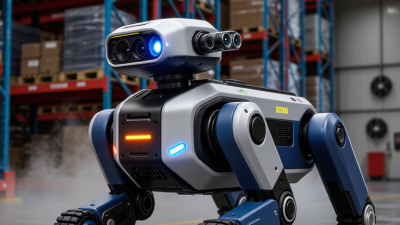
So, what happens when warehouse automation kicks into gear in an area where flammable gases, vapors, or dust might be floating around? That’s where an Explosion-Proof Logistics Robot really comes into play. These guys are built for those tough environments—they move stuff around, scan inventory, and handle routine transport tasks—all while cutting down on how much human exposure there is. But honestly, its worth isn’t just about having a sealed-up body. Nope, important stuff like controlled motors, protected electrical circuits, reliable sensors, and well-managed batteries are all key ingredients. Every single part counts. Even a tiny weak spot in the design can turn into a big headache in operations. Alexander van der Laan, the CEO of ExRobotics, sums it up pretty well: “Safety isn’t an afterthought—it's built into every move the robot makes.” And that’s totally true when it comes to logistics automation. On the ground, you might see the robot carrying a small load through tight aisles, stopping next to a pallet, and even sending status updates back to a control room miles away. Its navigation needs to be sharp—able to spot obstacles, handle uneven floors, and adapt to whatever’s changing in the warehouse. Plus, operators need easy access to maintenance logs, proper training, and clear inspection routines. And let’s not forget, following hazardous-area standards and doing site-specific risk assessments are absolute musts. Now, don’t get me wrong—this tech is super impressive, but it’s not some magic bullet. Sometimes, facilities might need to run the robot a bit slower, keep a closer eye, or set different limits on what it can carry. It’s important to recognize these limits. When choosing an explosion-proof robot, don’t just pick one off a brochure. You’ve got to dig into the certification details, check its environmental ratings, look at the software controls, understand emergency procedures, and see what support they offer. A solid Explosion-Proof Logistics Robot combines tough engineering with careful human oversight—that mix is what makes automation safe, predictable, and genuinely useful in those really demanding industrial settings.
Read more »
Ethan By:Ethan - September 21, 2026
How to Choose a Quadruped Patrol Robot Dog?

How to Choose a Quadruped Patrol Robot Dog?

Picking out a quadruped Patrol Robot dog isn’t just about comparing cameras, battery sizes, or even watching them walk around. You really need to think about whether the platform fits your specific site, how often it’s expected to work, the terrain it’ll cover, the climate conditions, and how it’ll fit into your team’s workflow. I mean, a warehouse floor feels totally different from a muddy construction site or a steep industrial trail. Little things matter — stuff like how easily it navigates stairs, how tight it can turn, how long it takes to charge, thermal imaging capabilities, and how safe and easy remote control is. Marc Raibert, the guy who started Boston Dynamics, once said a robot is “a machine that senses, thinks, and acts.” That’s still pretty good advice when you’re figuring out if a Patrol Robot is the right fit. You want sensors that give you reliable info, software that helps make clear decisions, and movement that’s predictable — especially around people. And hey, don’t just go off shiny, professional-looking videos. Ask for real field-test results. How does the robot hold up after it’s been kicking around in dust, dealing with spotty network coverage, climbing things repeatedly, or working overnight for long hours? Also, check its maintenance history and get a sense of how trained your team needs to be to operate it. Trust me, reliability is something you only really get to know after using the thing for a while. Of course, no robot is perfect. It might detect heat from a source but misjudge what’s actually causing it. Or it might walk confidently right past a tiny obstacle. That’s why choosing wisely means considering human oversight, privacy settings, secure data management, and clear boundaries for operation. Don’t buy tech just because it looks super advanced — take the time to compare total costs of ownership, including batteries, repairs, software updates, how well it integrates into your setup, and the time your staff will need to learn it. Talk to people who’ve actually used similar systems, test the robot on your usual routes, and be honest about any failures. Sometimes, that not-so-glamorous robot turns out to be a better investment in the long run.
Read more »
Sophie By:Sophie - September 18, 2026
2026 Top Quadruped Robot Suppliers for Global Buyers?

2026 Top Quadruped Robot Suppliers for Global Buyers?

So, when we look at the 2026 Quadruped Robot market, it's really shifting gears. We're moving beyond cool demos to actually seeing these robots bring real value in the market. Buyers are now pretty clear about what they want: reliable tools for inspection, mapping, security, and industrial data collection. Basically, a robot that can handle stairs, wet floors, loose gravel—you know, all those tricky surfaces—and keep going through multiple battery cycles. Plus, it needs to play nice with existing software and safety protocols too. Industry reports are showing some solid momentum, but the numbers can vary a lot depending on who you ask. MarketsandMarkets, for example, points out that industrial inspection, public safety, and research are the main areas where growth is expected. On the flip side, ABI Research talks about autonomous mobile robots in a broader sense—covering logistics and industrial work. Meanwhile, the International Federation of Robotics keeps reporting ongoing investments into automation, though most of their stats focus on industrial robots specifically. These differences are kind of important because not every forecast measures quadruped platforms the same way. As for who's leading the charge, you've got names like Boston Dynamics, ANYbotics, Unitree Robotics, DEEP Robotics, and Ghost Robotics. Each of these companies targets different environments, price points, payload capacities, and software ecosystems. Boston Dynamics, for instance, has a lot of real-world experience with their Spot robots. ANYbotics is really focused on industrial inspection tasks. Unitree Robotics offers budget-friendly options and quick product development. DEEP Robotics is all about inspection and emergency scenarios, while Ghost Robotics leans into rugged, specialized platforms. But here’s the thing—rankings can sometimes be a bit misleading. A slick demo might not tell the whole story, especially when it comes to support or maintenance. Buyers should really ask for data on how many hours the robots can walk, what it costs to replace batteries, detailed API documentation, training options, and local support contacts. And, honestly, testing the robot right on your site is crucial—it’s a step that often gets skipped. This guide tries to compare major suppliers based on real-world performance, deployment evidence, technical capabilities, service reliability, and the overall cost of ownership. Just keep in mind, some of these conclusions are still a little tentative because the market is still evolving and settling into place.
Read more »
Oliver By:Oliver - September 14, 2026
How to Choose a Robot Police Dog for Security?

How to Choose a Robot Police Dog for Security?

Picking out a Robot Police Dog isn’t just about comparing specs like camera quality, battery size, or showing off a flashy demo. Honestly, you need real proof. According to the International Federation of Robotics, there were over 541,000 industrial robots put into action worldwide in 2023—that’s a clear sign robots are becoming a big part of the professional scene. But just because a robot is used in factories doesn’t automatically mean it’s ready to keep everyone safe. A patrol robot has to handle all sorts of unpredictable stuff—bumpy pavements, rain, stair edges, radio hiccups, and people acting unpredictably. If you look into the industry’s research from MarketsandMarkets, they highlight four major areas to focus on when evaluating these robots: autonomous navigation, perception, connectivity, and fleet management. These should be your guiding points. A solid Robot Police Dog should easily handle shaky footage near a dark loading bay, head back to its charging station before the battery dies, and record sharp, clear data during inspections. Plus, its user interface should be straightforward enough to use during a noisy night shift—no confusion there. Sometimes, it’s the little things that count. And don’t forget about security stuff like cybersecurity, privacy controls, how easy it is to do maintenance, and how much human oversight there actually is. NIST’s AI Risk Management Framework suggests we keep an eye on things like how reliable, safe, and secure the system really is, throughout its entire lifecycle. That’s helpful, but it doesn’t replace actually testing the thing out yourself. No tech is perfect, and sometimes a demo can hide issues—like bad cellular coverage or slow obstacle detection. When shopping around, you should ask for independent test results, response times, policies on software updates, and clear compliance info. Some folks might be searching online for ‘Robot Dog Police’ or something similar, but honestly, choosing the right one depends on what you need—your specific mission, environment, staff skills, and overall risk. The smartest move? Start small with a controlled pilot. Test it out on real patrol routes, see how many false alarms pop up, check how long it takes to recharge, watch how operators handle it, and see how it recovers from failures. Only then consider rolling it out on a larger scale.
Read more »
Sophie By:Sophie - September 10, 2026