

News




How Thermal Cameras Can Improve Industrial Inspection with Quadruped Robots?
Industrial inspection often relies on visual observation. Cameras and human inspectors can identify many visible problems, but not every abnormality can be seen from the outside.
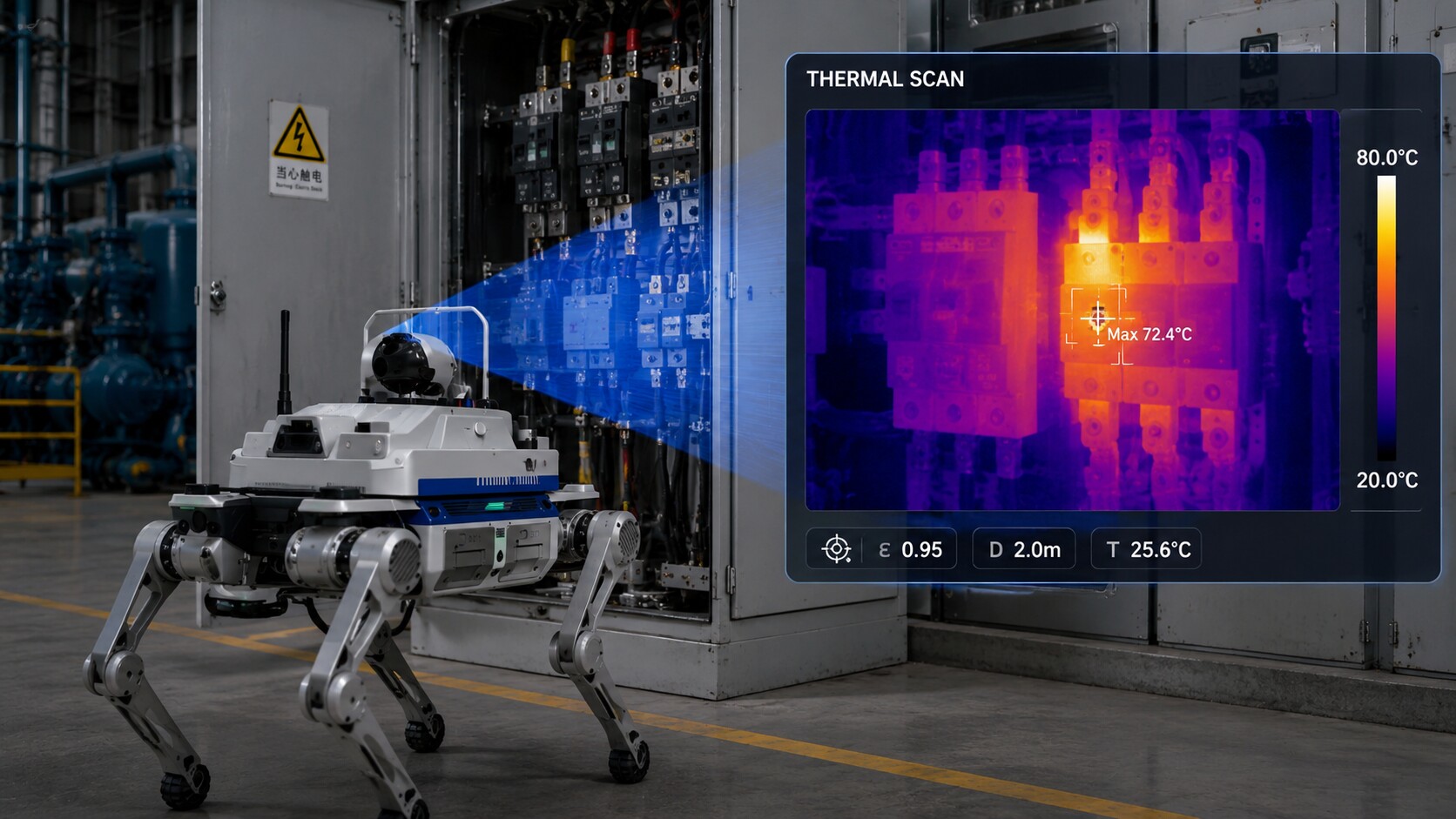
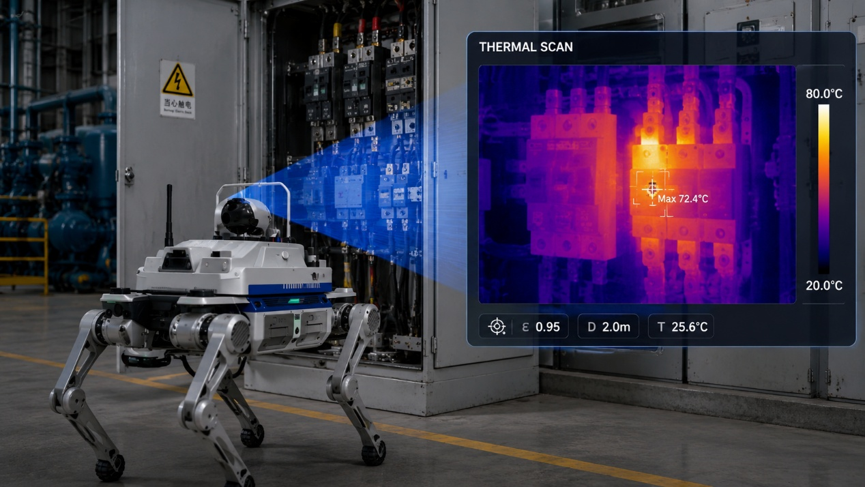
A machine may look normal while a component is operating at an unusual temperature. Thermal imaging can provide additional information by showing temperature differences that may not be visible in a standard RGB image.
When combined with a mobile robot, thermal imaging can become part of a more repeatable and structured inspection workflow.
Why Is Thermal Inspection Useful?
Traditional visual inspection is effective for identifying visible conditions such as physical damage, corrosion, leaks, and equipment status.
However, temperature can provide another important indication of equipment condition.
A thermal camera can capture temperature distribution and highlight unusual thermal patterns. This information can then be used as an additional reference for inspection personnel.
Importantly, a thermal image showing an unusual temperature pattern does not automatically mean that equipment has failed. It indicates that the area may require further attention or verification.
Why Combine Thermal Cameras with Quadruped Robots?
Thermal cameras can already be used by human inspectors. So why put one on a quadruped robot?
The answer is not simply automation. It is repeatability and mobility.
A human inspector can walk to an inspection point and collect thermal data. But when the same inspection needs to be repeated every day, every shift, or several times a week, the process can become time-consuming.
A mobile robot can potentially follow a predefined route and collect thermal and visual data from the same inspection locations repeatedly.
A typical workflow could be:
Predefined Route → Autonomous Navigation → Inspection Point → Data Collection → Remote Review
This allows routine inspection to become a more consistent and repeatable process.
Why Does Repeatability Matter?
Imagine that a facility has multiple critical inspection points.
Instead of manually visiting each location every time, a robot can potentially follow the same route and collect data from the same points at regular intervals.
This creates an opportunity to compare inspection results over time.
Instead of asking only:
“Is this equipment hot?”
inspection teams can also ask:
“Has the thermal pattern changed over time?”
This shift from one-time inspection to repeated data collection can support longer-term equipment condition monitoring.
The robot does not need to make the final maintenance decision. Its role is to collect consistent data and help inspection personnel focus their attention where it matters.
Combining Thermal and Visual Inspection
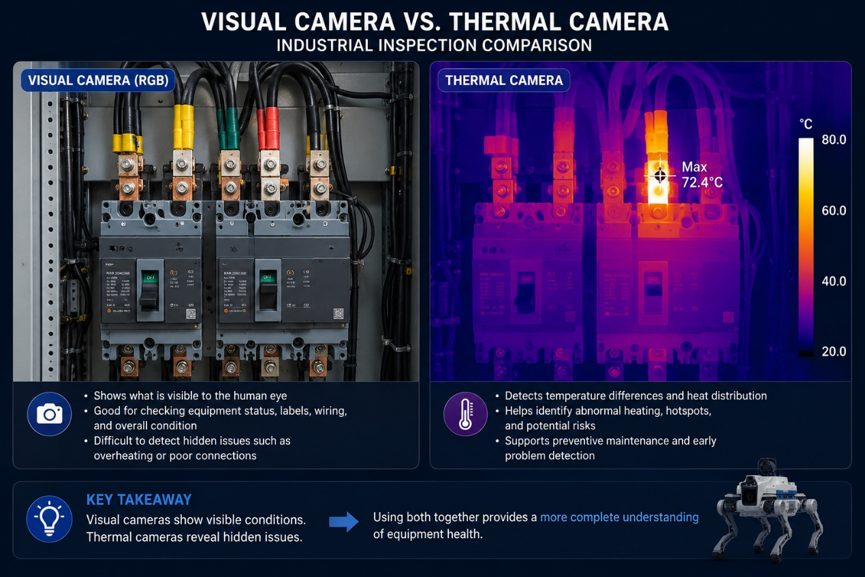
Thermal imaging does not need to replace conventional visual inspection.
The two technologies can complement each other.
RGB cameras can provide information about visible conditions, while thermal cameras can provide information about temperature distribution and thermal patterns.
Together, they can provide a more complete picture of equipment conditions.
This multi-sensor approach can also make Robotic Inspection more flexible, depending on the actual requirements of the site.
What Does a Practical Robotic Inspection Workflow Look Like?
A practical deployment should start with the inspection task, not simply with the choice of a camera or robot.
A basic workflow can include:
1. Identify inspection points
Determine which locations require regular monitoring.
2. Plan the route
Consider terrain, obstacles, communication, battery capacity, and inspection time.
3. Collect data
The robot navigates to predefined points and collects thermal and visual information.
4. Review results
Inspection personnel review the collected data and identify areas that may require further investigation.
5. Make decisions
Human experts combine inspection data with operating conditions and maintenance information before making maintenance decisions.
This creates a practical model:
Robot collects data → Human analyzes → Human makes decisions
Why Choose a Quadruped Robot?
Thermal cameras can be integrated with different types of Mobile Robots.
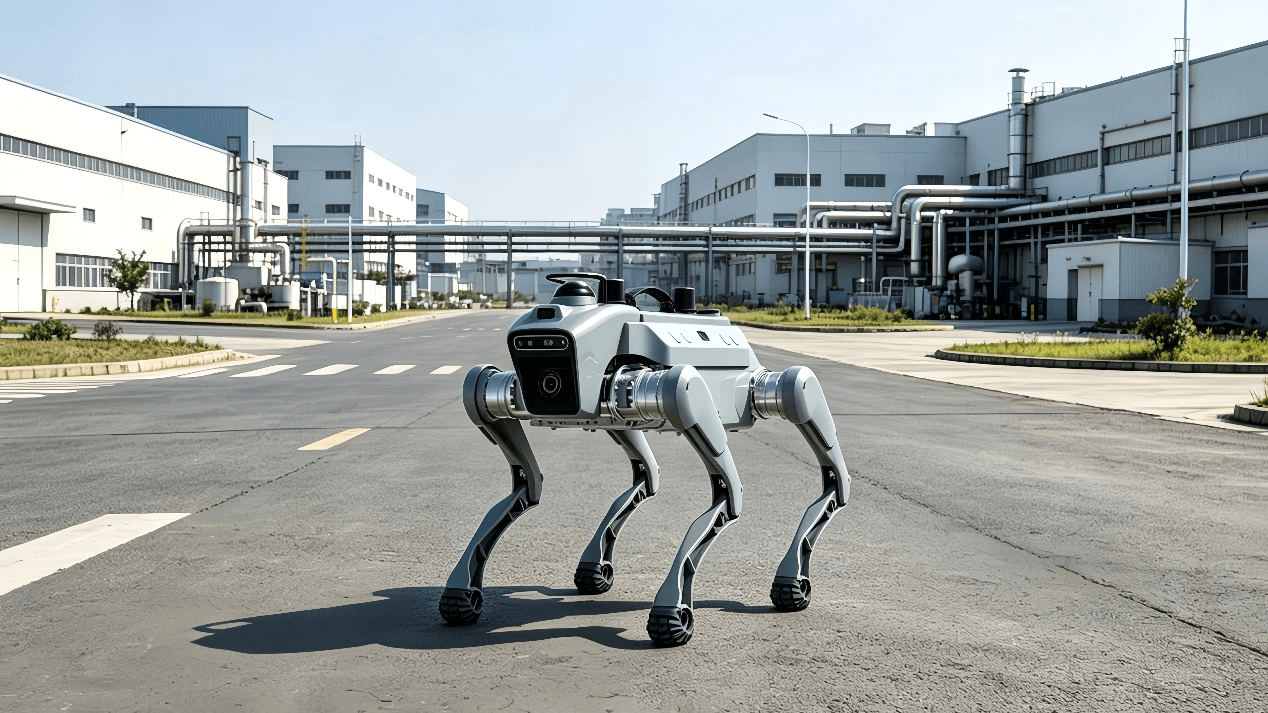
A Wheeled Robot may be more suitable for flat and structured environments. A quadruped robot can provide greater mobility when inspection routes include uneven ground, slopes, stairs, outdoor areas, or changes in elevation.
Therefore, the question should not simply be:
“Which robot is more advanced?”
A better question is:
“Which type of mobility fits the inspection environment?”
The application should determine the robot—not the other way around.
Conclusion
The practical value of thermal imaging is not simply that “a robot can see heat.”
It is that a suitable mobile robot can repeatedly collect thermal and visual information from the same inspection points, helping teams identify changes and focus their attention on areas that may require further investigation.
For companies evaluating robotic inspection, the first step is to define the inspection objectives, environment, route, required sensors, and frequency of inspection.
If you are exploring quadruped robots for thermal or multi-sensor industrial inspection, share your application requirements with our team. We can help assess whether a quadruped platform is suitable for your inspection environment.